
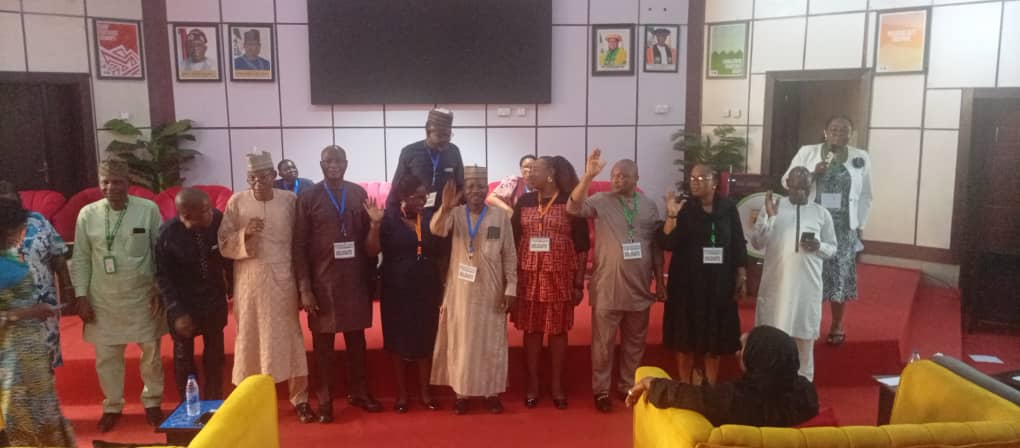
The University Secretarial Staff Association (USSA) has ushered in a new National Executive Council to pilot the affairs of the Association for the next four years, with Comrade Musa Josiah Kallah of Kaduna State University emerging as the new National President.
The new leadership emerged at the 52nd National Delegates’ Conference of USSA held on Wednesday, September 9, 2026, at Nasarawa State University, Keffi (NSUK), where delegates from university branches across the country exercised their mandate in the election of officers to steer the affairs of the Association at the national level.
In his acceptance speech following his election, Kallah expressed profound gratitude to members for the confidence reposed in him, describing the mandate as a responsibility to serve, protect and advance the interests of every member of the Association.
“I stand before you today with a heart full of gratitude and a deep sense of responsibility,” he said, while assuring members that the new administration would work to build a stronger, more united and responsive USSA.
He declared that the electoral contest was now over and that the priority of the new leadership must be the collective advancement of the Association.
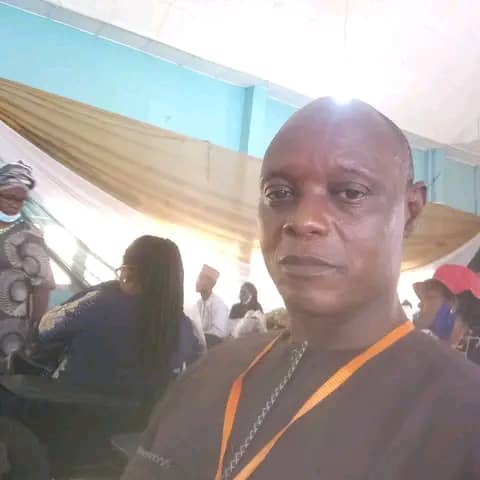
“The contest is over. Now the work begins. USSA is bigger than all of us,” Kallah said.
Four-Point Agenda
At the centre of the new administration’s programme is a four-point agenda anchored on restoration of members’ confidence, inclusive leadership, transparency and accountability.
On confidence-building, Kallah promised an immediate tour of the Association’s zones within his first 100 days in office to engage directly with members, listen to their concerns and identify practical solutions to their challenges.
He also pledged to pursue immediate welfare-related initiatives that would provide what he described as “quick wins” and demonstrate the administration’s commitment to members from the outset.
Under the inclusive leadership pillar, the new President promised to ensure that the National Executive Council and its committees reflect regional, gender and youth considerations.
He further announced plans for an open-door policy, including quarterly virtual engagements and a suggestion portal through which members and branches would be able to communicate ideas and concerns directly to the National Secretariat.
Kallah also placed transparency at the heart of his administration, stressing that members have a right to know how their contributions are utilised.
“Your dues are your sweat. You deserve to know how they are used,” he stated.
According to him, the administration will publish quarterly financial reports, subject them to auditing and communicate financial disbursements through clear and transparent processes.
He also unveiled plans for a Digital USSA Hub, envisaged as a website or application through which members could access real-time information on Association activities, dues status and projects.
The fourth pillar, accountability, will focus on measurable performance and institutional responsibility. Kallah said his administration would establish achievable targets for the National Executive Council and review its performance every six months.
He further promised to establish an independent grievance redress mechanism to ensure that complaints by members are addressed fairly and transparently.
The President also committed himself to presenting mid-term and end-of-term reports to the National Executive Council and Congress, providing members with a data-driven assessment of promises made and achievements recorded.
New National Executive Council
The newly elected National Executive Council comprises:
• National President: Comrade Musa Josiah K. — Kaduna State University (KASU)
• Deputy National President: Comrade Awolaja Mary O. — Olabisi Onabanjo University (OOU)
• General Secretary: Comrade Udoh Mfon Okon — Nnamdi Azikiwe University (UNIZIK/NAU)
• Assistant Secretary: Comrade Ogundiran Gabriel — University of Ibadan (UI)
• National Treasurer: Comrade Ekuma Celestina A. — Ebonyi State University (EBSU)
• National Financial Secretary: Comrade Mansur Lawal — Usman Danfodiyo University, Sokoto (UDU)
• National PRO I: Comrade Aminu R. — Bayero University, Kano (BUK)
• National PRO II: Comrade Joseph A. Zaccheaus — Olabisi Onabanjo University (OOU)
• National Auditor I: Comrade Iduwa Joel Samuel — Nasarawa State University, Keffi (NSUK)
• National Auditor II: Comrade Ola-Ogunmade Patience O. — Ambrose Alli University (AAU)
• National Vice President I: Comrade Priscilla N. Tor — University of Jos (UNIJOS)
• National Vice President II: Comrade Ben Oseyomon — Ambrose Alli University (AAU)
• National Legal Adviser: Comrade (Mrs.) Abdul Onyebueke Oyin — Olabisi Onabanjo University (OOU)
The emergence of the new council marks another significant chapter in the history of USSA and reflects the confidence placed in the new officers by delegates representing university branches across Nigeria.
Beyond electoral victory, the new administration faces the task of translating its campaign commitments into tangible outcomes, strengthening the Association’s internal structures and deepening its engagement with university authorities and other relevant stakeholders.
Kallah acknowledged the scale of the task and appealed to zonal leaders, branch executives and members across the country to support the new administration.
He called for unity and a collective commitment to moving the Association forward, urging members to put past differences aside and concentrate on the work ahead.
“A trusted association is a strong association. And a strong association gets results,” he said.
The new administration has consequently signalled its intention to pursue an era of greater member engagement, institutional openness and performance-driven leadership, with the ultimate objective of strengthening the welfare, professionalism and collective voice of University Secretarial Staff across Nigerian universities.
As the new National Executive Council begins its four-year tenure, the expectations of members will now be measured not merely by the promises made at the conference, but by the extent to which the administration converts its four-point agenda into demonstrable results.