
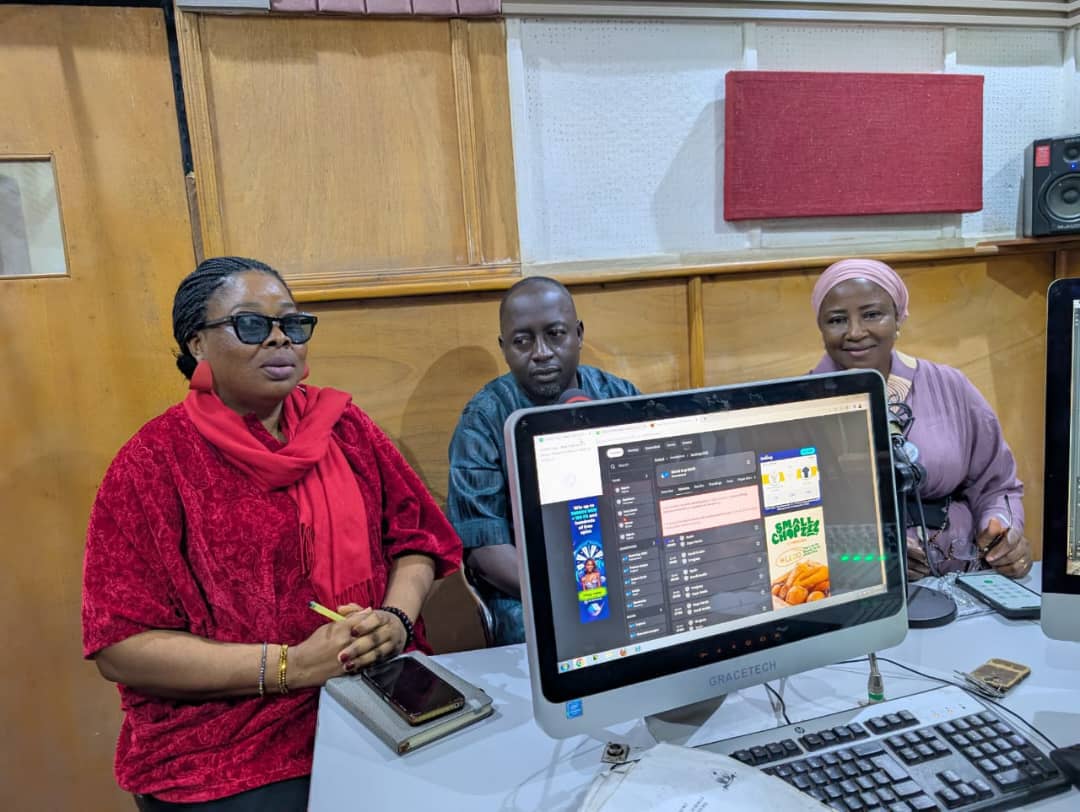
As part of activities marking the 2026 World Sickle Cell Day, the Community Service Department of Kaduna State University (KASU) Library, in collaboration with the Department of Haematology and Blood Transfusion of Barau Dikko Teaching Hospital, SCORE, and CONSA, organized a radio sensitization programme on KASU FM 98.5 on the 15th of June 2026.
The programme, anchored by Mrs. Lami Gillian Daniel, Head of the Community Service Department, KASU Library, focused on the theme: Strengthening Community Awareness, Newborn Screening, and Family Support for Sickle Cell Disease.
The discussion featured Dr. Livingstone Dogara, Chief Consultant Haematologist at Barau Dikko Teaching Hospital and Coordinator/Principal Investigator of the Newborn Screening Programme, Kaduna State, alongside Dr. Esther Gani. They provided valuable insights into Sickle Cell Disease (SCD), its prevention, early diagnosis, and the importance of family and community support.
Speaking during the programme,Dr. Dogara emphasized that no child born with Sickle Cell Disease should die because of where they are born. He noted that although more than 400,000 babies are born with SCD globally each year, nearly half are born in Africa. Nigeria alone accounts for about 150,000 of these births annually, making it the country with the highest burden of the disease worldwide. In Kaduna State, over 4,000 babies are estimated to be born with the condition each year.
Dr. Dogara described Sickle Cell Disease as an inherited blood disorder that remains a major public health challenge in Nigeria.
He stressed the importance of genotype testing before marriage, early diagnosis, and newborn screening as effective measures for reducing the burden of the disease and improving health outcomes. According to him, newborn screening enables early identification of affected children and facilitates timely medical intervention, thereby reducing complications and improving survival rates.
In her contribution, Dr. Esther Gani highlighted the critical role of families in supporting individuals living with Sickle Cell Disease, often referred to as “Sickle Cell Warriors.” She emphasized the need for emotional support, access to quality healthcare, understanding, and acceptance within families and communities. She also called for an end to stigma and discrimination against persons living with the condition and advocated for more inclusive and supportive environments.
The programme encouraged young people to know their genotype before marriage and called on government agencies, healthcare providers, educational institutions, religious organizations, and community leaders to intensify awareness campaigns and support initiatives aimed at combating Sickle Cell Disease.
The sensitization programme reflects KASU Library’s commitment to community engagement, public education, and health promotion through strategic outreach activities. World Sickle Cell Day is observed annually on the 19th of June to raise awareness and advocate for improved prevention, diagnosis, treatment, and support for individuals and families affected by Sickle Cell Disease worldwide.
It’s encouraging to see KASU and Barau Dikko Teaching Hospital taking proactive steps to raise awareness about sickle cell disease. The radio program on KASU FM 98.5 sounds like a fantastic initiative to educate the community ahead of World Sickle Cell Day. recommended