


Welcome to the Department of Microbiology at Kaduna State University (KASU).
Step into the frontier of 21st-century science, where invisible worlds shape our lives and our future. Microbiology is the study of the powerful, unseen forces (bacteria, viruses, fungi, and parasites) that influence everything from the air we breathe to the inner workings of our own bodies. It is a field where curiosity meets purpose, dedicated to solving humanity’s most urgent challenges. Read More
The Department of Microbiology at Kaduna State University (KASU) was established in 2004 during the university’s formative years, with academic programs commencing in 2005. The department was founded to address Nigeria’s growing need for skilled professionals in public health, environmental management, agriculture, food security, and industrial development, and it operates in full compliance with the standards of the National Universities Commission (NUC).
The department offers a comprehensive curriculum covering key areas of microbiology, including bacteriology, virology, mycology, parasitology, immunology, environmental microbiology, and biotechnology. Emphasis is placed on practical laboratory training, supported by modern teaching and research laboratories that serve both undergraduate and postgraduate students. A compulsory final-year research project equips undergraduates with hands-on experience in scientific inquiry, data analysis, and academic communication.
In addition to the Bachelor of Science (B.Sc.) in Microbiology, the department runs postgraduate programs including the Postgraduate Diploma (PGD), Master of Science (M.Sc.) in Medical, Environmental, and Food & Industrial Microbiology, as well as M.Phil. and Ph.D. research degrees. Research activities focus on critical local and global challenges such as infectious diseases, antimicrobial resistance, environmental bioremediation, food safety, and sustainable biotechnology.
Today, the Department of Microbiology at KASU remains committed to excellence in teaching, research, and community service—producing competent and innovative graduates equipped to contribute meaningfully to national and societal development.
The Department of Microbiology at Kaduna State University (KASU) offers a range of undergraduate and postgraduate programs designed to build strong scientific foundations and advanced research expertise. Our curriculum combines rigorous theoretical training with extensive hands-on laboratory experience, preparing graduates for careers in health, industry, research, and environmental management.
Bachelor of Science (B.Sc.) in Microbiology
Duration: 4 Years
The B.Sc. program provides a comprehensive understanding of microorganisms and their roles in health, agriculture, food security, the environment, and biotechnology. Students receive strong training in core areas such as microbial genetics, immunology, diagnostic microbiology, microbial ecology, and industrial microbiology, supported by intensive laboratory work and a compulsory final-year research project.
Admission Requirements:
Minimum of five (5) O’Level credits in English Language, Mathematics, Biology, Chemistry, and Physics
UTME (JAMB) with participation in KASU Post-UTME screening
JAMB subjects: English Language, Biology, Chemistry, and either Physics or Mathematics
The department offers advanced postgraduate programs for specialization and research development:
Postgraduate Diploma (PGD) in Microbiology – 1 academic session
(For graduates with Third Class degrees, related disciplines, or HND (Upper Credit))
Master of Science (M.Sc.) in Microbiology – Minimum of 2 years
Specializations in Medical, Environmental, and Food & Industrial Microbiology
Doctor of Philosophy (Ph.D.) in Microbiology – Minimum of 3 years
Research-focused training for careers in academia, advanced research, and industry leadership
Program durations are subject to university regulations.
Students across all programs benefit from:
Intensive hands-on training in specialized laboratories
Supervisor-led research in areas such as infectious diseases, antimicrobial resistance, food safety, and environmental bioremediation
Participation in seminars, workshops, and scientific conferences
Start your journey with us and build a rewarding career at the forefront of microbiological science.
Our research initiatives address critical and timely issues such as:
Through these focus areas, our students and faculty contribute to impactful advancements, addressing global and local challenges in microbiology.
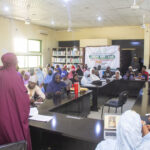
The Department of Microbiology is a vibrant hub for scientific discourse and collaboration. We actively organize and participate in major conferences, symposia, workshops, and seminars to drive innovation, support professional development, and translate microbiological science into solutions for public health and economic challenges.
These gatherings serve as crucial platforms for scientists, researchers, policymakers, and students to exchange groundbreaking ideas, address emerging threats, and forge collaborative strategies to tackle local and global issues.
A Track Record of Leadership
We are proud to have recently hosted two landmark national events, underscoring our role at the forefront of the field:
A Commitment to Continuous Dialogue
As part of our strategic vision to foster ongoing knowledge exchange, the department is committed to hosting a major scientific event biennially. We are currently planning our next flagship symposium for 2026, which will focus on “The Role of Microbiology in Curbing Societal Challenges.”
Through this active engagement, the Department of Microbiology at KASU solidifies its position as a leading center of excellence, propelling advancements in research, education, and health strategy both nationally and internationally.


THE LIBRARY
The Department of Microbiology offers students access to extensive academic resources, including specialized texts on microbial genetics, immunology, and environmental microbiology. Students also have access to leading journals, such as Journal of Clinical Microbiology, Applied and Environmental Microbiology, and Microbiology Spectrum, along with a wealth of digital research materials. These resources enable our students to deepen their expertise and remain abreast of the latest scientific discoveries.
ADVANCED LABORATORY FACILITIES
Our state-of-the-art laboratories support high-level microbiological research, equipped with advanced culturing systems, DNA analysis platforms, and microbial testing tools. These facilities offer students practical experience with essential techniques that form the cornerstone of careers in microbiology and biotechnology.
COMMUNITY ENGAGEMENT
The Microbiology Department engages with the community through the following:
These efforts advances meaningful connections and address critical local challenges.
DISTINGUISHED FACULTY
Our dedicated faculty members are experts in diverse fields within microbiology, bringing a wealth of knowledge and experience to the classroom and lab. They are committed to mentoring students, advancing research, and inspiring the next generation of microbiologists. See full staff list here (insert link).

1. Ph.D. Parasitology – In-view
2. M.Sc. Medical Microbiology – 2015
3. B.Sc. Microbiology – 2010
4. Senior Secondary School Certificate – 2005
5. Primary School Leaving Certificate – 1999


Dedicated microbiologist, educator, mentor, researcher, and community service advocate.

– PhD Microbiology Ahmadu Bello University Zaria
– MSc Microbiology Bayero University Kano
STUDENT HANDBOOK
The Microbiology Department’s Student Handbook provides comprehensive information on academic policies, course requirements, and available resources. It serves as a valuable guide for students. Access the full handbook here (insert link).